
Bruges, Belgium | 14–18 September 2026
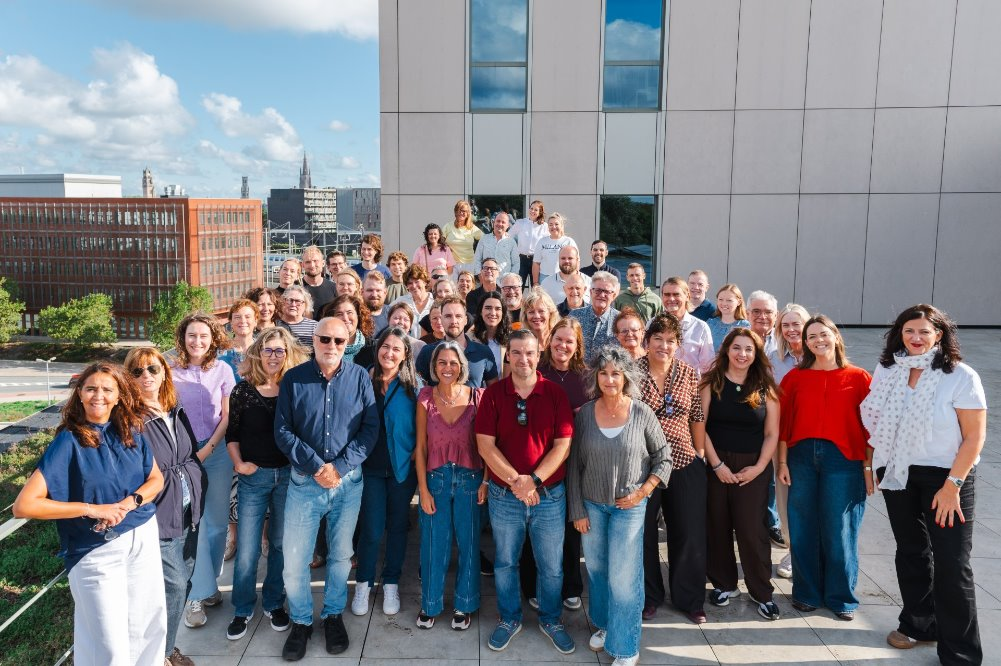
From 14 to 18 September 2026, the EU-SIDE project brought together teachers, experts and representatives of partner institutions in Bruges, Belgium, for five days of evaluation, exchange, collaborative work and project coordination, hosted by Howest University of Applied Sciences.
The programme was structured around two complementary events: the 360° Evaluation, held from 14 to 16 September, and the third Transnational Partner Meeting (TPM), held on 17 and 18 September.
360° Evaluation: Learning from Experiences and Perspectives across Europe
The 360° Evaluation focused on assessing the outcomes and overall implementation process of the EU-SIDE project.
The event brought together participating teachers and experts from the countries involved in the project, creating opportunities to share different perspectives, experiences and areas of expertise. The experts represented a range of sectors, including academia, local communities, and public and private organisations.
The first day focused on the experiences of teachers who had participated in the EU-SIDE Short Advanced Programmes (SAPs). Teachers presented their pedagogical approaches and engaged in group discussions to reflect on their practices in relation to the EU-SIDE pedagogical design principles and competence framework. Experts also assessed these approaches using the same framework.
The exchanges between teachers and experts provided an opportunity to identify lessons learned, discuss effective practices and explore remaining challenges, connecting educational experiences with perspectives from different professional and institutional contexts.
On the second day, participants travelled to Ghent, where they explored examples of social innovation and engaged with organisations including Compagnie Cordial, The Klusserette and Sociale Innovatiefabriek. These visits encouraged reflection on experiences across different national contexts, helping participants identify common challenges, specific needs and potential forms of support.
The final day shifted the focus towards future developments. Participants worked collaboratively on the development of a workshop aimed at strengthening teachers’ competences in social innovation education, integrating the EU-SIDE pedagogical design principles and competence framework.
They also developed proposals to improve and facilitate the project’s cascading model, through which participating teachers act as multipliers, transferring EU-SIDE knowledge, tools and practices to wider communities of teachers and schools.
The 360° Evaluation therefore went beyond assessing the work carried out so far. It provided an opportunity to learn from experience, refine existing approaches and prepare the next stages of the project.
Transnational Partner Meeting: Coordinating the Next Steps
On 17 and 18 September, the EU-SIDE consortium gathered at Howest Bruges for its third Transnational Partner Meeting (TPM).
Bringing together representatives of all consortium institutions, the meeting provided an opportunity to build on the outcomes of the 360° Evaluation, review project progress and coordinate upcoming activities.
The first day began with a reflection on the lessons emerging from the evaluation process. Partners discussed the ongoing revision of the competence framework and pedagogical design principles, the next steps for the Short Advanced Programmes (SAPs) and Blended Intensive Programmes (BIPs), and the findings from the evaluation questionnaires.
The cascading model was also discussed, with particular attention to how the proposals developed during the 360° Evaluation could inform the next stages of implementation and strengthen the transfer of knowledge and practices to schools.
The second day continued with updates on Work Packages 1 and 6, followed by discussions on project coordination and upcoming priorities.
From Evaluation to Action
Together, the two events marked an important step in the development of EU-SIDE.
The 360° Evaluation provided insights from teachers and experts, identifying opportunities to improve pedagogical approaches and strengthen the project’s wider impact. The Transnational Partner Meeting then connected these findings with the consortium’s planning and implementation priorities.
Five days of collaboration in Bruges reinforced a shared commitment to transforming evaluation into meaningful educational action, while strengthening the European community of practice at the heart of EU-SIDE.